





FMCG compliance gives food and beverage producers a practical way to align daily work with food safety regulations, industry standards and customer requirements.
When compliance is built into daily routines, teams protect consumers, reduce waste and remain audit-ready throughout the year.
Use this guide to turn policy into predictable daily practice across sites.
What FMCG compliance really means for food manufacturers
FMCG compliance is the practical alignment of food safety, product quality and operational discipline with regulations and customer expectations. For food and beverage manufacturers, it is not a paperwork exercise. It is a way to run stable production, protect consumers and maintain retailer confidence. When FMCG regulatory compliance is built into everyday routines it supports consistent output, fewer losses and faster problem resolution.
In real factories this often means implementing a single system that ties food safety and compliance together. This involves creating one set of clear standards and responsibilities, one source of truth for records and one cadence for reviews. Quality, production and engineering teams then work from the same playbook using common language for hazards, controls and verification that stands up during a BRCGS audit.
Regulatory pressures facing FMCG manufacturers
The compliance landscape is complex. Requirements vary by market and retailer while supply chains stretch across regions with different rules. A structured approach keeps factories on the front foot and supports FMCG regulatory compliance at scale.
Retailer and customer expectations
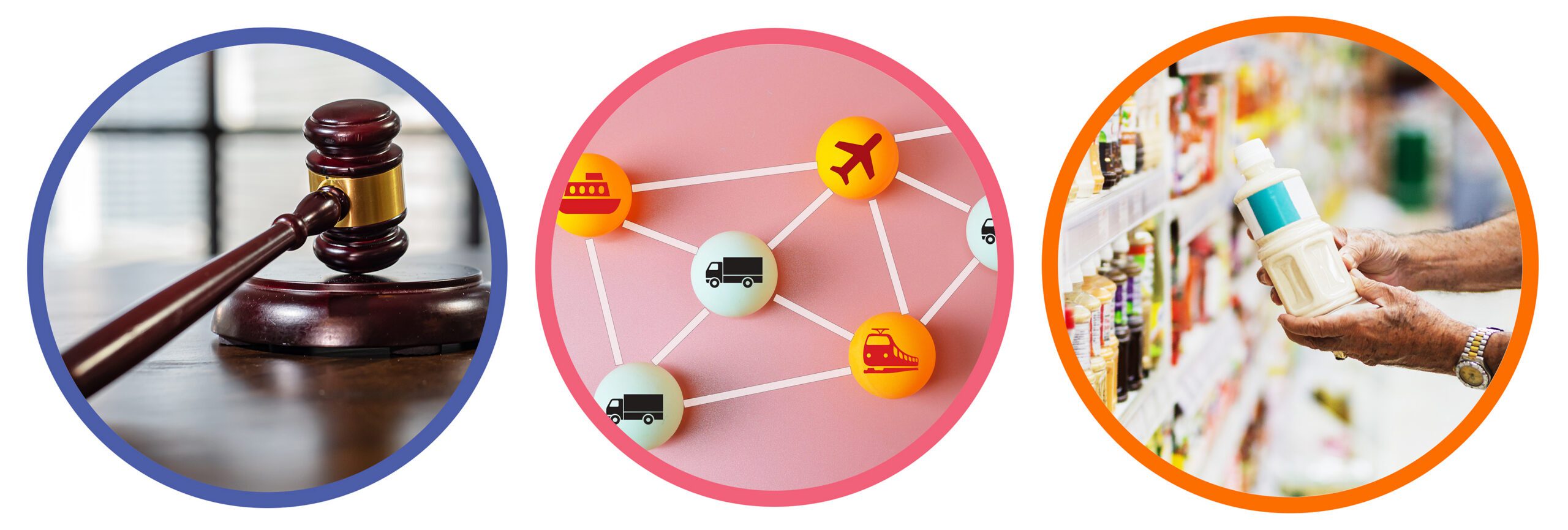
Retailers set codes of practice that extend beyond legislation. Expectations include supplier approval, product specifications, change management and robust traceability. Many customers operate scorecards and routine site visits that assess performance and conformance. To succeed, factories need evidence that standards are followed during normal operations not just when an audit is due.
Legal and industry standards
Food laws and recognised industry schemes establish the baseline. Manufacturers must show due diligence through documented procedures, trained people and reliable records. Audit readiness depends on controlled documents, time-stamped logs, calibration records and proof that corrective actions are completed effectively. Consistency across shifts matters as much as well-documented processes.
Global supply chains and risk
Sourcing across multiple regions creates variability in ingredients, lead times and documentation. Regulations evolve, labelling rules differ and provenance expectations are rising. Supplier assurance, specification control and inbound verification reduce downstream surprises. A disciplined approach to FMCG regulatory compliance helps teams manage uncertainty without slowing production.
Common FMCG compliance gaps in the factory

Even well-run sites encounter friction where manual processes meet scale. Recognising the typical gaps helps target improvement. If your records are fragmented or slow to assemble, a practical overview of food safety compliance software outlines how digital capture, alerts and dashboards strengthen compliance without adding paperwork.
Fragmented data and manual processes
P aper checks and spreadsheets are hard to standardise across lines and shifts. Data is delayed, trend analysis is limited, and audit packs take days to assemble. When an incident occurs, recreating an audit trail is slow and stressful.
Inconsistent ways of working between lines and sites
Procedures often start strong then drift over time. Checklists vary by area; sign-offs are inconsistent and version control slips. Variation makes it hard to prove compliance and harder still to improve.
Limited visibility of emerging issues
Managers discover problems after product has progressed downstream. Minor non-conformances repeat because no one sees the pattern. Without timely data it is difficult to prioritise action or quantify the impact of fixes.
Building a robust FMCG compliance framework
Compliance improves when expectations are clear, behaviours are simple to follow and feedback is fast. A framework built this way supports continuous improvement, smoother customer visits and stronger performance during a BRCGS audit.
Clear standards, policies and responsibilities
Define who owns which parts of the system. Quality leads own food safety risk assessment and verification; production owns execution on the line; engineering owns equipment condition and calibration. Keep procedures short, visual and specific about what good looks like. And assign ownership for documents, training, checks and corrective actions so gaps do not fall between functions.
Training, culture and engagement
Operators and supervisors make the critical decisions under time pressure. Role-based training should focus on the few behaviours that matter most, reinforced through brief refreshers and observed practice. Leaders set the tone by opening meetings with safety and quality status, recognising good catches and closing the loop on issues. Over time, this builds a culture where food safety and compliance are non-negotiable.
Monitoring, verification and continuous improvement
Measure what matters and make it visible. In-line checks, environmental monitoring and label verification provide early warning signs. Internal audits and layered process confirmations test that routines are followed. Trend data then highlights hotspots, recurring deviations and improvement opportunities. The goal is to prevent issues not just detect them.
The role of food safety compliance software in FMCG compliance
Digital tools turn a static programme into a responsive, scalable system that works across lines and sites. They centralise records, standardise checks and give leaders near real-time visibility that supports FMCG regulatory compliance and day-to-day control.
Moving beyond paper and spreadsheets
Manual systems slow investigations and hide trends. They rely on perfect handwriting, perfect filing and perfect recall which, at scale, is unrealistic. Digital capture removes transcription errors and creates records that are searchable, time-stamped and tamper-evident.
Centralising checks, forms and workflows
Standard digital forms guide operators through inspections, CCP checks and hygiene routines. Configurable workflows trigger holds, escalations and approvals when limits are breached. This reduces variation and ensures the right actions happen at the right time.
Real-time visibility and traceability
Dashboards show the status of checks, overdue actions and open non-conformances. Alerts reach the right people quickly, so teams can contain issues before product flows onward.
Traceability records help link raw materials, processes and finished goods so investigations are faster and narrower.
Connecting your food safety compliance system to wider manufacturing compliance
Food safety compliance does not operate in isolation. In practice, it connects with maintenance, production control, change management and performance monitoring. When compliance systems sit alongside wider manufacturing processes, teams gain clearer context around why checks matter and how deviations affect output, risk and customer confidence.
Aligning food safety compliance with broader manufacturing compliance helps reduce duplication, improve consistency between departments and ensure that actions taken on the shop floor are supported by accurate, shared data. This joined-up approach strengthens control while supporting day-to-day operational decision making.
How manufacturing compliance platforms support FMCG compliance at scale

Point tools help but a platform designed for factories brings everything together. A manufacturing-focused solution connects food safety tasks with quality checks, maintenance confirmations and operational routines, so compliance strengthens overall performance.
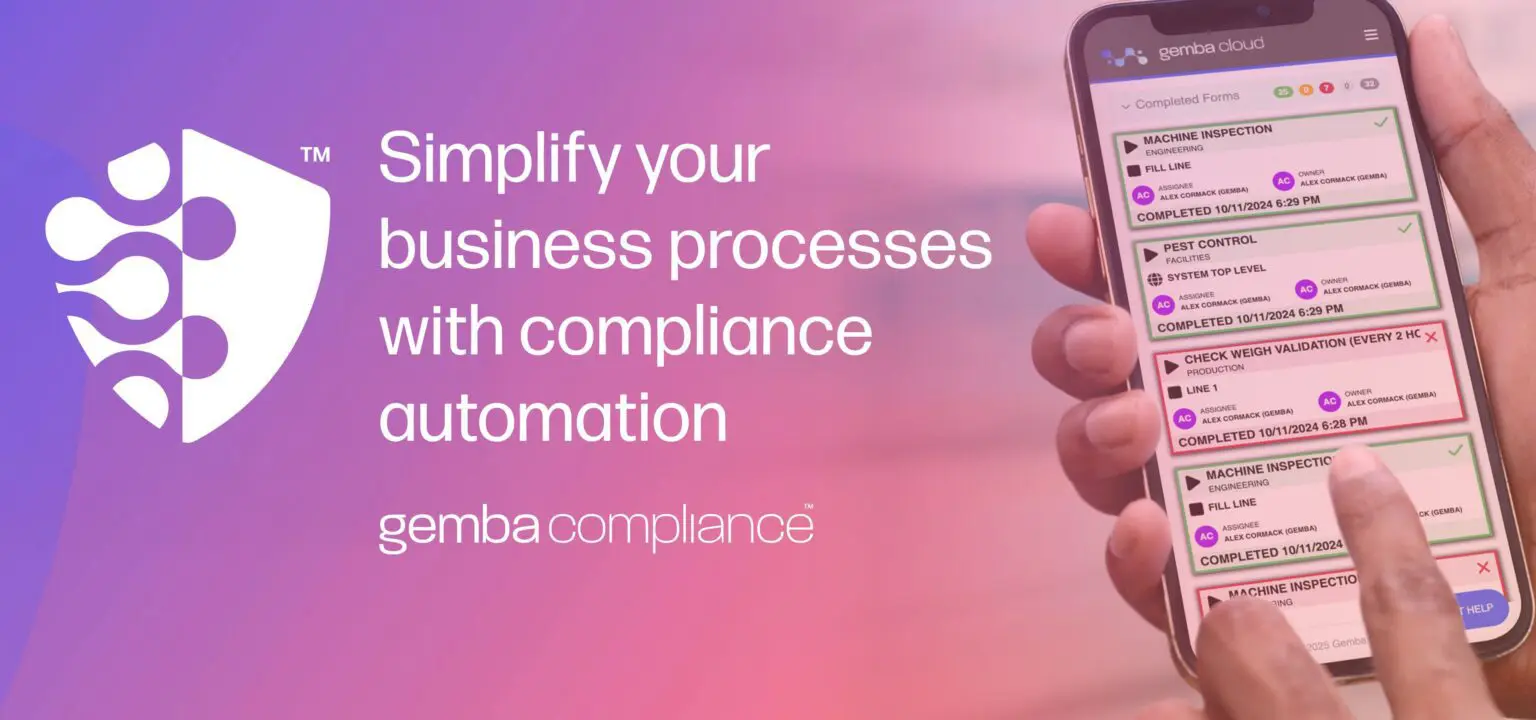
A platform like Gemba Compliance standardises processes across lines and sites, centralises data and provides near real-time visibility. Configurable workflows guide operators through checks while automated alerts drive timely escalation. Built-in reporting and audit trails reduce preparation time and improve confidence that documentation reflects reality on the floor. With integrated traceability, issue resolution is quicker and recall scope is smaller.
As part of a broader approach to manufacturing compliance, integrated platforms are a solid foundation for sustainable FMCG regulatory compliance rather than a single point fix.
Turning FMCG compliance into a competitive advantage
Proactive FMCG regulatory compliance protects consumers and brands while enabling reliable operations. The strongest programmes unite clear standards, engaged people and trustworthy data so problems are prevented not just detected. Start by clarifying roles, simplifying line routines and instrumenting high-risk checkpoints. Then use digital tools to surface exceptions in near real time, standardise audits and strengthen traceability.
Ultimately, the best platform is one designed for manufacturing compliance that can centralise the work, reduce duplication and support continuous improvement across your sites.