





Product compliance testing plays an important role in demonstrating that products meet relevant safety, regulatory and quality requirements. For UK manufacturers, it forms part of a broader compliance process that can include product design, materials, production controls, documentation, testing and ongoing quality management.
However, manufacturers should not treat testing as a standalone checkpoint. A test result provides evidence at a particular point in time. Manufacturers also need records, processes and controls that demonstrate how they manage compliance throughout production.
This article explains what product compliance testing involves, when it may be required and how it connects to the wider controls manufacturers need to have in place.
What is product compliance testing?

Manufacturers use product compliance testing to assess whether a product meets relevant regulatory requirements, safety standards, customer specifications or other defined criteria.
The sector, product and applicable requirements determine what manufacturers need to test. In food manufacturing, this could include microbiological testing, allergen testing or shelf-life validation. In pharmaceuticals, testing can include analytical testing, stability studies and finished product testing against approved specifications. For industrial and electrical products, testing may form part of the conformity assessment process. It can cover safety, performance or other product-specific requirements.
Importantly, not every product or regulatory regime requires the same type or level of testing. Manufacturers need to establish which requirements apply to their products and determine how they must demonstrate compliance.
For some products, testing is a formal part of conformity assessment. For others, it forms part of a wider combination of risk assessment, technical documentation, manufacturing controls and ongoing monitoring.
When is product compliance testing required?
Different circumstances can trigger testing or a review of existing compliance arrangements. Common examples include:
- New product introduction: before placing a product on the market, manufacturers need to establish that it meets relevant regulatory, safety and specification requirements. Testing may form part of this assessment, depending on the product and applicable rules.
- Changes to formulation, materials or process: changes that affect product composition, manufacturing methods or inputs may require the product’s compliance status to be reviewed and, where appropriate, further testing carried out.
- Supplier changes: switching suppliers may require additional verification or testing. This can apply even where materials are intended to be equivalent, depending on the associated risk and applicable requirements.
- Regulatory or standards changes: changes to legislation, standards or specifications should trigger a review. Manufacturers can then determine whether existing evidence remains sufficient or further assessment or testing is necessary.
- Periodic testing: some regulations, standards, certification schemes and customer requirements specify ongoing testing or verification at defined intervals.
- Customer or retailer requirements: customers may set additional testing requirements through supplier approval processes, specifications or supply agreements.
- Following a quality or safety issue: a non-conformance, complaint or other quality event may require targeted testing. This can help investigate the issue and determine whether it affects other products.
Manufacturers should base testing requirements on the risks and requirements relevant to each product. A single approach will not suit every product.
The role of standards in product compliance testing
Testing does not happen in isolation. Where manufacturers need to test a product, they use defined criteria. These may include regulatory requirements, recognised standards, approved specifications or customer requirements.
For UK manufacturers, these requirements can come from several sources:
- UK legislation and assimilated law
- Product and sector-specific regulations
- Recognised or designated standards
- Industry certification schemes, such as BRCGS Global Standards within food manufacturing
- Customer specifications and contractual requirements
- International standards relevant to the product or sector
For consumer products in Great Britain, the General Product Safety Regulations 2005 provide a baseline safety framework. They apply where more specific product safety legislation does not cover the relevant risk. Northern Ireland operates under a different general product safety regime, with Regulation (EU) 2023/988 applying since December 2024.
Sector-specific requirements also apply. Food manufacturers, for example, operate within food safety legislation and applicable standards. Pharmaceutical manufacturers must follow medicines legislation and Good Manufacturing Practice requirements.
Manufacturers therefore need to understand which rules apply to their products and markets. They can then determine the appropriate testing and compliance process.
Testing is part of a wider compliance process
A successful product compliance test does not, by itself, demonstrate ongoing compliance.
Testing is most effective when it sits within a broader compliance framework covering records, responsibilities, change management, investigation and ongoing review.
Documentation and traceability
Manufacturers need to record test results accurately. Where required, they should link them to the relevant product, batch, production run or other reference.
This provides context about what manufacturers tested and when. It also helps them demonstrate the evidence behind their compliance decisions.
Traceability requirements vary considerably between products and sectors, so manufacturers need to understand the level of product, batch and supply-chain traceability required by the regulations and standards that apply to them.
Testing records and retention
Product compliance testing can generate test reports, certificates, completed checks, supporting evidence and approval records. Manufacturers need to retain these according to the requirements for their product and sector.
Retention periods are not universal.
Within pharmaceutical manufacturing, for example, specific GMP requirements govern the retention of batch documentation. Food manufacturers may follow different legal, certification, customer and internal requirements for traceability and quality records.
Manufacturers need to know which records they must retain and for how long. They also need to retrieve them when an audit, investigation, inspection or quality event requires them.
Non-conformance handling
When testing or a compliance check identifies a non-conformance, how the manufacturer responds is just as important as the original result.
Manufacturers need a defined process for recording the issue, assessing affected product, investigating the cause and determining what corrective action is required.
Manufacturers should document the original finding, investigation, decisions and resulting actions. This creates a clear record of how they managed the issue through to closure.
The original finding, investigation, decisions and resulting actions should be documented so there is a clear record of how the issue was managed through to closure.
Ongoing compliance monitoring
Product compliance is not necessarily fixed at the point a product is first approved or released.
Products, materials, suppliers, processes, standards and regulations can change. Manufacturers therefore need processes to identify these changes and review whether existing compliance evidence remains appropriate.
That may result in further testing, additional verification or an update to existing documentation and controls.
What auditors look for in product compliance testing
Customer, certification and regulatory audits vary by sector and applicable standard. However, testing and its supporting evidence can form an important part of the review.
Depending on the audit requirements, auditors may examine:
- whether the manufacturer has defined and completed required testing or verification activities
- whether teams use appropriate test methods and specifications
- whether appropriately competent personnel or laboratories carry out testing where required
- whether results are recorded accurately and can be associated with the relevant product or batch
- whether the manufacturer retains records according to applicable requirements
- how the manufacturer investigates and resolves failures and non-conformances
- whether the manufacturer reviews testing and compliance arrangements when relevant changes occur
Carrying out the required activity is only part of the picture. Manufacturers also need to be able to demonstrate what happened.
Incomplete records, inconsistent documentation or difficulty retrieving evidence can make compliance harder to demonstrate. This can cause problems even when teams have completed the underlying checks.
Common weaknesses in product compliance testing programmes
Common weaknesses can include:
- Failing to update testing schedules or requirements when products, suppliers, processes or standards change
- Storing results across paper records, spreadsheets, folders and separate systems, making evidence difficult to retrieve
- Handling non-conformances informally, without a consistent investigation and closure process
- Failing to link test results to the relevant product, batch or production activity where required
- Filing third-party test results without reviewing them against the relevant specification or acceptance criteria
- Lacking a defined process to determine whether a material, supplier or process change requires further assessment or testing
- Missing or incomplete evidence showing who completed, reviewed or approved a compliance activity
These are not necessarily failures of the testing itself. They are often weaknesses in the processes surrounding the testing.
What good product compliance management looks like

Effective product compliance management combines appropriate testing with clear processes for recording, reviewing and responding to the results.
Manufacturers should define testing and verification requirements according to the product, associated risks and applicable requirements. Teams should complete records consistently and store them so they can find the relevant evidence when needed.
When teams identify an issue, they need a clear route from the initial finding through investigation, action and closure.
In practice, this can mean:
- A testing and verification programme that aligns with applicable requirements
- A process for reviewing requirements when products, materials, suppliers, processes or regulations change
- Consistent recording of results and supporting evidence
- Relevant product or batch references where required
- A structured process for recording and investigating non-conformances
- A process for assigning, tracking and closing corrective actions
- Appropriate review and approval stages within compliance processes
- Clear records showing what teams completed, when they completed it and who was responsible
This turns compliance into part of normal operational activity rather than something that has to be reconstructed when an audit or inspection approaches.
How software supports product compliance testing
Software does not replace testing or determine whether a product meets regulatory requirements. Instead, it can provide greater control over the processes, records and actions surrounding product compliance testing.
Paper forms, spreadsheets, shared folders and separate records can make compliance activity difficult to manage consistently. Teams may struggle to find the right record, understand its status or establish what happened after a failed check.
A digital compliance system can provide a more structured approach.
Teams can assign scheduled checks and forms to the appropriate people. They can also capture results and supporting evidence consistently. Conditional questions can guide users through different requirements based on their answers. Approval stages can also provide additional control when someone needs to review a completed record.
If a check identifies an issue, users can raise an action directly from the relevant question, section or form and assign it for follow-up. Completed forms, approvals and actions then contribute to a clearer audit trail.
This is where Gemba Compliance supports manufacturers.
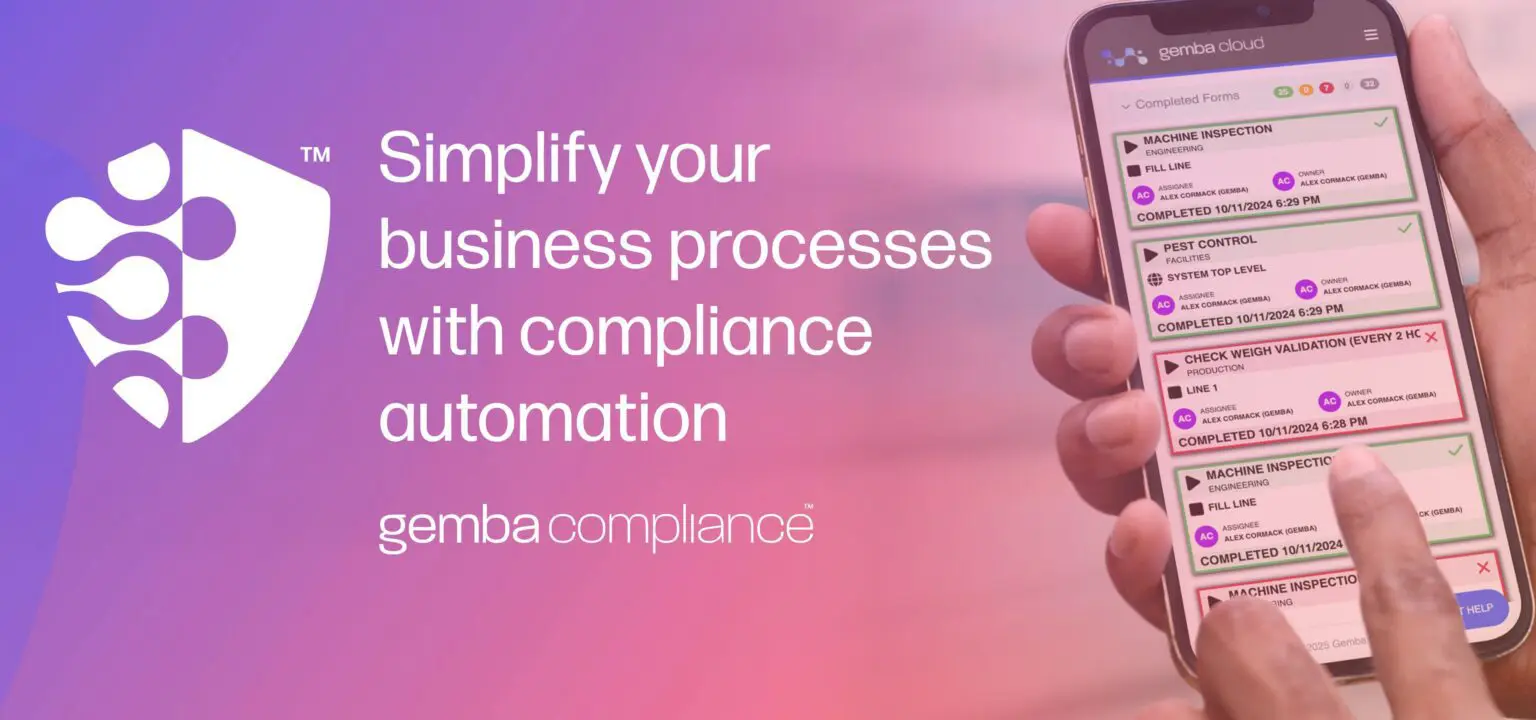
Gemba Compliance provides configurable digital forms that can be used for quality, safety, hygiene, maintenance and other compliance processes. Forms can include conditional logic, defined thresholds, images and supporting evidence. Teams can also schedule forms and assign them to specific users.
Approval workflows provide additional control over completed forms. Users can also create actions from individual questions, sections, pages or complete forms when something requires investigation or follow-up.
Gemba Compliance does not replace laboratory systems, product testing or the judgement of compliance teams. It helps manufacturers manage the operational processes and records around these activities more consistently.
Managing product compliance as an operational standard, not an audit event
Product compliance testing delivers most value as part of an ongoing compliance process. Manufacturers should not treat it as a box to tick before launch or an activity to revisit shortly before an audit.
Manufacturers need to know which requirements apply, what testing or verification they need and what evidence they must retain. They also need a reliable way to respond to changes or problems identified during checks.
Bringing those processes into day-to-day operations creates a stronger evidence base and makes it easier to demonstrate how compliance is being managed.
Gemba Compliance helps manufacturers move away from paper forms and disconnected compliance records. It brings configurable digital checks, scheduled activities, approvals, actions and clear audit trails into a structured system.