





Preparing for a GMP compliance audit involves more than gathering documents before an inspection. Manufacturers need to demonstrate that their procedures are followed consistently, employees are appropriately trained and records accurately reflect the activities taking place across their operations.
For quality and compliance teams, maintaining this evidence can be demanding, particularly when information is spread across paper forms, spreadsheets and different departments.
GMP compliance software can support these activities by helping manufacturers manage routine checks, maintain accessible records and track actions that require attention.
However, software is only one part of an effective quality management system. Its value depends on how well it supports established procedures and the regulatory requirements that apply to the business.
This guide explores how digital compliance management can support GMP audit readiness, the limitations of manual processes and the important considerations when choosing software for regulated manufacturing.
Key takeaways
- GMP compliance requires manufacturers to demonstrate consistent processes, appropriate controls and reliable documentation
- Paper-based systems can meet GMP requirements, but managing records across departments and production sites can involve considerable administration
- Digital compliance software can support inspections, recordkeeping, approvals, corrective actions and audit preparation
- Pharmaceutical manufacturers must consider additional requirements for computerised systems, including validation, data integrity and access controls
- Choosing the right software involves assessing its capabilities, intended use and suitability for the relevant regulatory environment
Why GMP compliance keeps getting harder to prove

Good Manufacturing Practice (GMP) establishes requirements for producing and controlling products consistently to the appropriate quality standards.
In pharmaceutical manufacturing, GMP forms an essential part of the regulatory framework. It covers areas including personnel, premises, equipment, documentation, production and quality control.
Accurate and reliable records have always been fundamental to these requirements.
Manufacturers must demonstrate that employees follow approved procedures, complete necessary checks and investigate deviations appropriately.
However, maintaining this evidence can become more challenging as manufacturing operations develop.
Additional production lines, new products, supplier changes and multiple sites can all increase the volume of information that quality teams need to manage.
At the same time, businesses may operate across several regulatory frameworks, each with its own documentation and control requirements.
Digital systems can help manufacturers manage these activities, but they also introduce responsibilities around data integrity, system security and appropriate validation.
The challenge is therefore not simply collecting more information. It is ensuring that records remain accurate, complete, accessible and appropriately controlled throughout their required retention period.
GMP compliance software can support this process by providing structured ways to capture information and manage routine compliance activities.
What audit-ready actually means
Being audit ready means maintaining effective procedures and reliable evidence as part of normal manufacturing operations, rather than preparing everything immediately before an inspection.
For a pharmaceutical manufacturer, an inspector may need to examine approved procedures, training records, production documentation, deviations and the actions taken to address identified problems.
The organisation must be able to demonstrate that its quality management system operates effectively.
This involves several important areas:
- Controlled procedures: Employees have access to current, approved instructions relevant to their responsibilities
- Accurate records: Activities are documented appropriately, with information that is attributable, legible, contemporaneous, original and accurate
- Trained personnel: Employees receive suitable training and understand the procedures they must follow
- Deviation management: The business investigates problems, assesses their impact and implements appropriate corrective and preventive actions
- Effective quality controls: Processes, equipment and relevant systems operate within established requirements
- Accessible evidence: Authorised personnel can retrieve records when required for investigations, reviews or inspections
Digital software can help manufacturers manage some of these activities.
However, accessible documentation alone does not demonstrate GMP compliance. The underlying procedures, decisions and controls must also be appropriate and effective.
A well-managed system supports both aspects by helping employees carry out their responsibilities and retain evidence of completed activities.
Where paper and spreadsheets break down
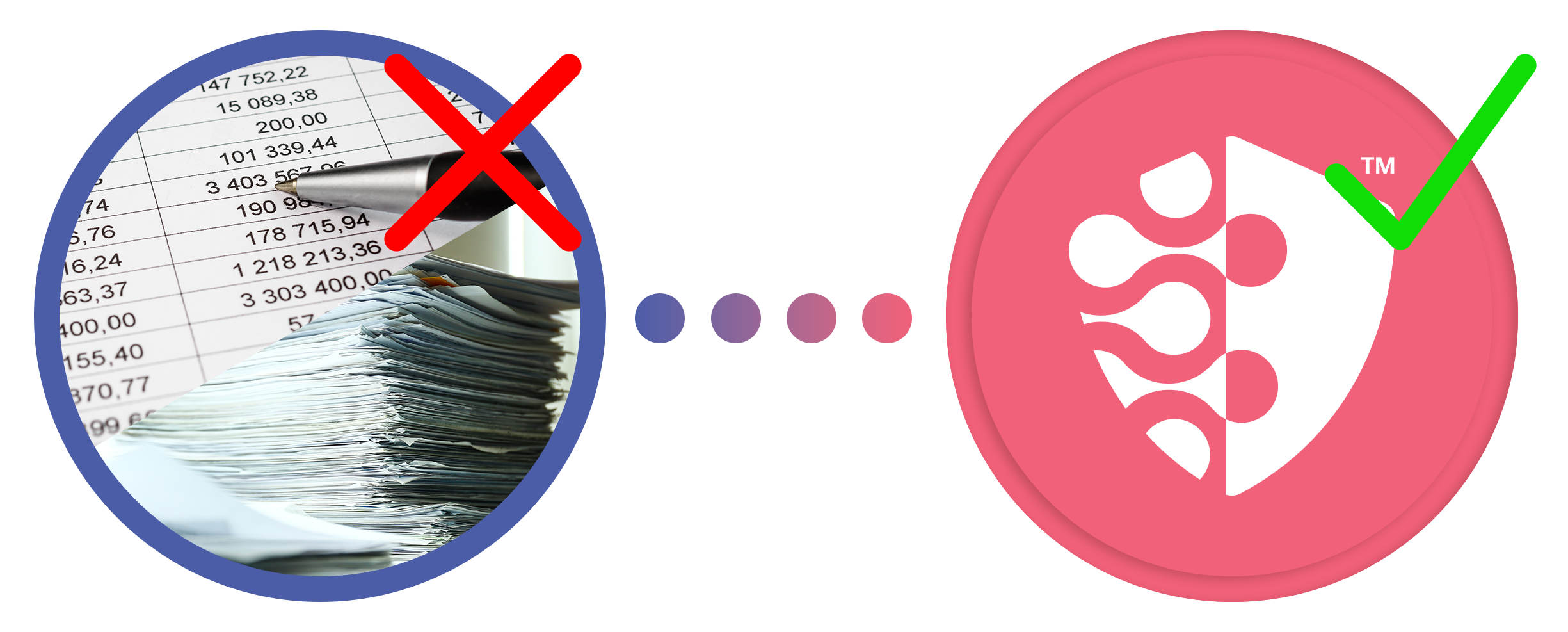
Paper forms and spreadsheets remain common across manufacturing operations.
They are not inherently unsuitable for GMP-regulated activities. When properly designed, controlled and maintained, paper-based systems can meet regulatory requirements.
However, they can introduce additional administrative work, particularly when manufacturers manage large volumes of records.
Consider routine quality checks across several production lines.
Employees may complete paper forms during each shift before passing them to supervisors for review. Quality teams then need to collect, check, file and retain those records.
If an inspector requests evidence relating to a particular date or production activity, retrieving the information may involve searching several filing locations.
Spreadsheets can present similar challenges.
Without appropriate controls, employees may use different versions of a template, overwrite information or maintain records in separate locations.
Version control is another important consideration.
When a procedure changes, manufacturers need to ensure that employees use the approved version and that superseded documents are managed appropriately.
Manual systems can achieve this, but doing so consistently requires clear responsibilities and effective controls.
Digital compliance management can reduce some of this administration by allowing employees to complete checks electronically and giving authorised users access to centrally managed records.
It can also support the identification of outstanding activities and actions requiring follow-up.
However, businesses must still establish suitable procedures for reviewing, approving and retaining the information collected.
What good GMP compliance software actually does
GMP compliance software can cover a broad range of functions, depending on the platform and its intended use.
Some systems provide comprehensive pharmaceutical quality management capabilities, while others focus on specific activities such as inspections, electronic forms, document management or corrective action tracking.
When evaluating software, manufacturers should identify which capabilities they actually require rather than assume that every platform provides the same functionality.
| Capability | Why it matters for GMP compliance |
| Structured digital forms | Helps employees complete checks consistently and capture the information required by established procedures |
| Document version control | Supports the management of approved documents, revisions and access to current procedures |
| Scheduling and task assignment | Helps teams manage recurring inspections, reviews and other compliance activities |
| Approval workflows | Provides a structured process for reviewing and approving relevant records or activities |
| Non-conformance and action tracking | Helps businesses record identified problems, assign responsibilities and monitor progress towards resolution |
| Audit trails | Supports accountability by recording relevant activities and changes within the system |
| Reporting and dashboards | Provides visibility of completed checks, outstanding actions and areas requiring management attention |
| Record relationships and traceability | Where supported, allows information to be associated with relevant products, batches, equipment or activities |
| Training records management | Where supported, helps maintain evidence of employee training and relevant competency requirements |
Not every compliance platform includes all these functions.
For example, software designed primarily for digital inspections may not provide comprehensive document lifecycle management or employee training records.
Similarly, the presence of an audit trail does not automatically establish that a system meets every applicable GMP data integrity requirement.
Manufacturers should assess the specific features, configuration and controls of any software against their intended use.
GMP compliance software in pharmaceutical manufacturing

Pharmaceutical manufacturers operate within a particularly demanding regulatory environment.
In the UK, pharmaceutical GMP requirements are overseen by the Medicines and Healthcare products Regulatory Agency (MHRA), with the applicable framework including relevant UK and international GMP standards.
Manufacturers must maintain suitable controls over production activities, quality assurance, documentation, personnel and equipment.
Where computerised systems support GMP-regulated activities, additional requirements may apply.
For example, EU GMP Annex 11 establishes expectations for computerised systems used in GMP-regulated environments.
These include appropriate validation, security, audit trails, data management and controls over system changes.
The system must be suitable for its intended purpose, and the manufacturer remains responsible for ensuring that its use meets applicable regulatory requirements.
This distinction is important when selecting GMP compliance software.
A digital forms platform may support routine inspections, hygiene checks or equipment-related compliance activities.
However, it should not automatically be treated as a complete pharmaceutical electronic quality management system (eQMS).
Specialist functions such as electronic batch records, comprehensive document lifecycle management, training management and formal deviation investigation may require additional software or established processes.
GMP requirements across other manufacturing sectors
Good manufacturing practice principles are also relevant to food and beverage production, although the applicable legislation and standards differ from those governing pharmaceutical manufacturing.
Food manufacturers may need to demonstrate compliance with food hygiene legislation, HACCP-based procedures and relevant customer or certification requirements.
Digital compliance software can support activities such as hygiene inspections, cleaning checks, temperature monitoring records and corrective action management.
Automotive manufacturers also operate under demanding quality management requirements, but these should not be confused with pharmaceutical GMP.
The common consideration across these sectors is the need for consistent processes and reliable records.
However, the specific compliance obligations must always be assessed against the relevant industry and regulatory framework.
What to look for when choosing GMP compliance software
Selecting software for regulated manufacturing requires more than comparing features.
Quality and compliance teams should consider how the system will be used, what information it will manage and which regulatory obligations apply.
Several questions are particularly important.
Does it support your existing compliance processes?
Software should support the checks, approvals and responsibilities that your business needs to manage.
Consider whether forms and workflows can be configured around established procedures without introducing unnecessary complexity.
Can it maintain accurate and accessible records?
Assess how employees enter information, how records are stored and how authorised personnel retrieve them.
Where relevant, consider timestamps, user identification, audit trails and controls over changes to existing records.
Does it provide appropriate access controls?
Employees should have access to the functions and information necessary for their responsibilities.
Manufacturers should understand how the system manages user permissions, authentication and the protection of records.
What validation requirements apply?
For pharmaceutical manufacturers, computerised systems used in GMP-regulated activities may require validation appropriate to their intended use and associated risks.
This can include documented requirements, testing, change control and evidence that the system performs as expected.
The supplier may provide supporting information, but responsibility for appropriate validation and compliant use remains with the regulated manufacturer.
How are electronic records and signatures managed?
Where electronic records or signatures are used for regulated purposes, businesses must assess the applicable requirements.
These may include provisions under EU GMP Annex 11 and, where relevant, US FDA 21 CFR Part 11.
Manufacturers should not assume that an electronic approval or digital signature automatically satisfies every regulatory requirement.
Can the software support your future requirements?
Consider whether the system can accommodate additional production lines, departments or sites.
It is also worth reviewing how configuration changes, software updates and ongoing support are managed.
What will implementation involve?
Implementation should account for system configuration, testing, procedures, employee training and any required validation.
The timescale will depend on the complexity of the system, the activities it supports and the organisation’s regulatory obligations.
A realistic implementation plan is more useful than a fixed deployment estimate that may not reflect your circumstances.
How Gemba Compliance supports GMP audit readiness
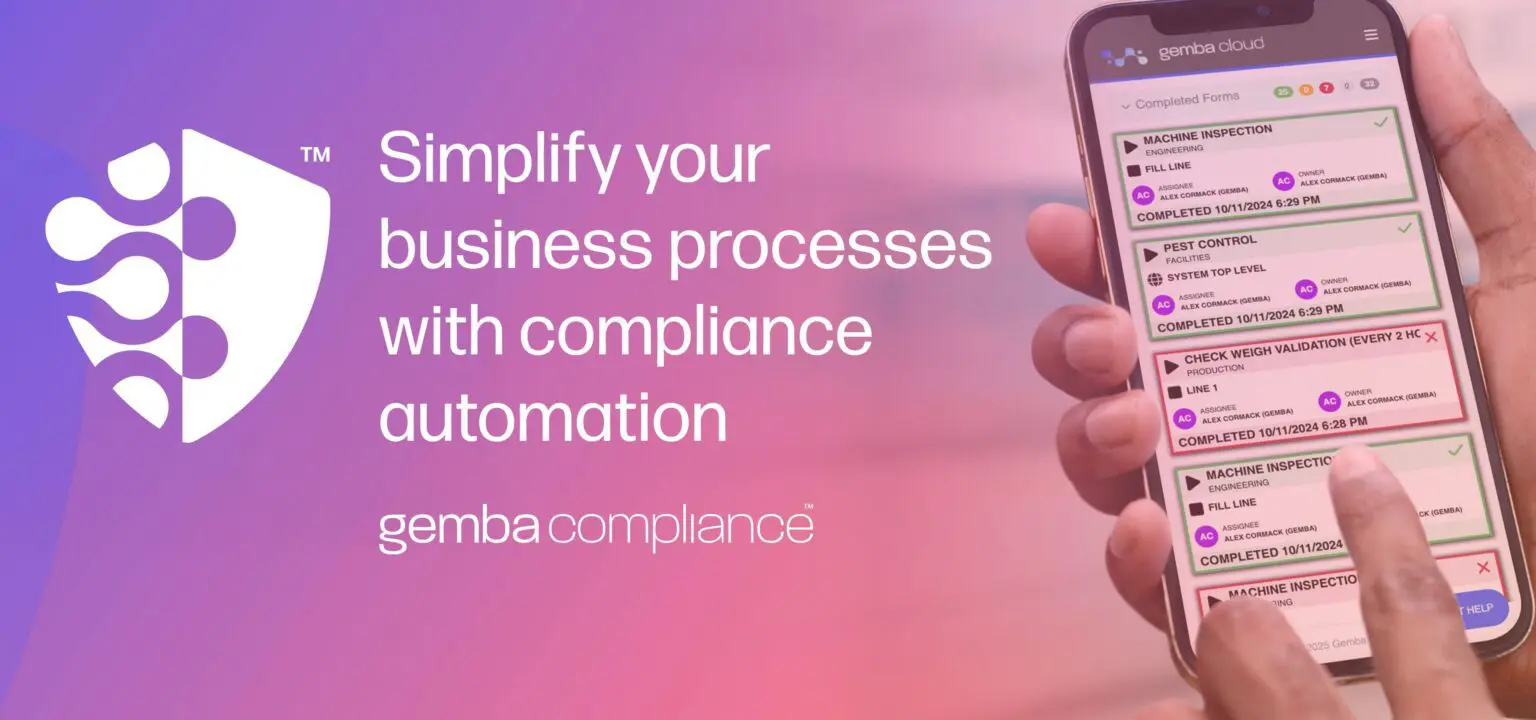
Gemba Compliance helps manufacturers manage routine compliance activities through configurable digital forms and structured workflows.
Rather than relying entirely on paper forms or disconnected spreadsheets, businesses can create and manage digital checks suited to their operational requirements.
The software supports a range of activities, including quality inspections, hygiene checks, safety checks and maintenance-related compliance records.
Forms can incorporate conditional questions, thresholds and supporting information such as photographs, allowing teams to capture relevant evidence during an inspection.
Manufacturers can also schedule activities, assign responsibilities and use approval processes where appropriate.
When a check identifies an issue, action tracking helps teams record the problem and manage the necessary follow-up.
Reporting and dashboards provide visibility of completed activities, outstanding actions and compliance performance.
In addition, audit trails help businesses maintain records of relevant activity within the system.
These capabilities can support GMP-related operational processes by helping teams maintain consistent checks and accessible evidence.
For example, a pharmaceutical manufacturer could use Gemba Compliance to manage certain equipment inspections, housekeeping checks or other defined operational activities.
A food manufacturer might use it for hygiene inspections, cleaning records or production-related quality checks.
However, Gemba Compliance should not be presented as a complete pharmaceutical eQMS or as automatically satisfying all GMP requirements.
Its suitability for a particular regulated activity depends on the manufacturer’s intended use, system configuration and applicable compliance obligations.
Where validation or additional controls are required, these must be addressed as part of the organisation’s wider quality management arrangements.
Getting started without disrupting your floor
Introducing new compliance software requires planning, particularly when existing processes support regulated manufacturing activities.
A phased implementation can help manufacturers introduce digital checks while maintaining appropriate operational controls.
Start by identifying a suitable process or group of checks.
This could involve a routine equipment inspection, hygiene assessment or another activity currently managed through paper forms.
Next, review the existing procedure and establish what information the digital system needs to capture.
Quality and operations teams should agree on responsibilities, approval requirements and how completed records will be managed.
Before the system becomes part of a regulated process, the business should complete any necessary testing, validation and procedural updates.
Employees also need appropriate training before using the new system.
Where suitable, a controlled parallel-running period can help teams compare the new process with existing arrangements and identify issues before wider deployment.
However, parallel running should form part of a documented implementation approach rather than replace formal validation or change control where those are required.
Once the process is operating effectively, manufacturers can consider extending the software to other departments or activities.
This approach allows businesses to assess the practical benefits while maintaining control over their compliance responsibilities.
Staying audit ready, not just audit prepared
GMP audit readiness depends on the quality of everyday manufacturing practices.
Effective procedures, trained employees, reliable records and appropriate corrective actions all contribute to demonstrating compliance.
Digital software can support these activities by making information easier to capture, review and retrieve.
It can also help managers identify outstanding checks and actions before they become more significant issues.
However, software cannot replace the knowledge, judgement and accountability required within a regulated manufacturing environment.
The objective is to establish processes that operate consistently throughout the year, supported by evidence that accurately reflects what happens across the business.
When compliance activities form part of normal operations, preparing for an inspection becomes a review of existing records rather than an exercise in reconstructing information.
See how Gemba Compliance can support your next audit
Managing routine inspections, quality checks and compliance records across a manufacturing site can involve considerable administration.
Gemba Compliance provides configurable digital forms, structured approvals, action tracking and reporting to help teams manage these activities.
Whether you are reviewing paper-based procedures or looking for greater visibility across multiple departments, the software can support a more consistent approach to operational compliance management.
Explore Gemba Compliance to learn more about its capabilities and how they could fit your existing processes.
FAQs
What is GMP compliance software?
GMP compliance software refers to digital systems used to support activities associated with Good Manufacturing Practice.
Depending on the platform, these may include document management, routine checks, deviation tracking, approvals, training records and audit trails.
The specific functions vary between systems, and manufacturers must assess whether the software is suitable for their regulatory requirements.
Is GMP compliance software only relevant to pharmaceutical manufacturers?
No. Digital compliance management can support quality and operational processes across several manufacturing industries.
However, pharmaceutical GMP has specific regulatory requirements that differ from those applying to food, beverage and automotive manufacturing.
Businesses should select software based on their industry’s obligations and the activities they need to manage.
What GMP compliance requirements does software typically help with?
Software can support recordkeeping, controlled procedures, routine inspections, approval processes, corrective action management and access to compliance evidence.
Some platforms also provide specialist capabilities such as electronic batch records, training management and document lifecycle control.
The software’s suitability depends on its functions, configuration and intended use.
How long does it take to implement GMP compliance software?
Implementation times vary according to the software, the number of users, the processes involved and the organisation’s requirements.
A relatively straightforward digital inspection process may require less preparation than a system supporting regulated pharmaceutical production records.
Where validation, procedural updates and formal training are necessary, these activities must be included in the implementation plan.
Do we need GMP compliance training before using software like this?
Employees must receive training appropriate to their responsibilities and the GMP activities they perform.
Introducing software does not remove this obligation.
Teams may also require training on the system itself, including how to complete records, report issues, review information and follow relevant procedures.
The level of training should reflect the employee’s role and the risks associated with the activities being managed.