





A BRCGS audit gives a clear view of how well your factory manages food safety, product quality and legal compliance day-to-day. Treat a BRCGS audit as both a milestone and a mirror so you can validate standards, prove evidence and focus improvement where it matters.
Use this guide to shape your approach and build a practical BRCGS audit checklist.
What a BRCGS audit involves
A BRCGS audit is a structured assessment of system design and how people use your systems on the floor. It tests whether documented procedures match real practice and whether records prove control over time. For quality, technical and operations teams, the process highlights strengths, gaps and priorities for continual improvement.
Purpose of a BRCGS audit
The BRCGS BRCGS Food Safety Global Standard sets common expectations for hazard control, site standards and product integrity. A strong result demonstrates due diligence to regulators and retailers, reduces recall risk and supports customer confidence while giving a framework for ongoing improvement.
Types of audits and grading
Audit frequency is influenced by the previous grade and audit programme of previous audits. Depending on your certification programme and previous grade, your next audit may be announced or unannounced.
In terms of results, you’ll be given a grade that reflects the number and severity of findings. Sites that show robust systems, clean execution and credible evidence will get a better grade, helping you maintain stronger commercial relationships.
Key areas auditors focus on

Auditors review design and execution across people, process and records. Expect attention on the following themes:
Senior management commitment and improvement
Leaders should set policy, allocate resources and review performance routinely. Auditors often ask about targets, review minutes and how improvement actions are carried out.
Our recommendation: Implement daily meetings that start with safety and quality status checks.
Food safety plan and hazard control
A HACCP-based plan must map the process, identify hazards and define CCPs with limits and monitoring. Validation, verification and change control should be current and visible.
Our recommendation: Create records as you go, it’s much easier to ensure they’re complete if you’re not doing it retrospectively.
Site standards and maintenance
Fabric, pest control, water quality and equipment condition must support hygienic production. Expect line walks that check access to handwashing, condition of guards and seals, segregation of materials and glass and plastics controls.
Our recommendation: Ensure maintenance and calibration records clearly document how any faults link to risk and how quickly they were resolved.
Product control and traceability
Auditors focus on label accuracy, allergen management and product testing. Traceability should link raw materials, WIP and finished goods including rework and label versions.
Our recommendation: Make it easy for the auditors by creating a single source of truth for traceability records that tracks the entire product journey.
How to prepare for a successful BRCGS audit

Treat preparation as a rolling cycle rather than a last-minute sprint. Follow these steps:
Understand the current standard and gap assess
- Review the latest issue and interpretation updates.
- Translate requirements into a practical BRCGS audit checklist that follows your process flow.
- Run a gap analysis against procedures, records and floor practice, then prioritise actions by risk and audit focus.
Organise documentation and records
- Align record templates to the steps they prove to make policies, procedures and work instructions easy to find and follow.
- Ensure training matrices, maintenance logs and calibration certificates are complete and current with housekeeping records tied to clear visual standards.
Run mock audits and site walks
- Cross functional pre audits reveal blind spots before the official visit. Walk the lines at different times of day to see how routines hold up under pressure.
- Time a mock recall and measure how quickly you can retrieve full genealogy.
If evidence retrieval is slow or fragmented, a practical guide to food safety compliance software explains how digital capture, alerts and audit trails reduce preparation effort while improving record quality.
Managing the audit on the day
Clear roles, tidy routes and calm hosting set the tone. Aim for transparency and steady pace.
Host the auditor and open well
Have the right people present. Typically, this includes the quality lead, a production representative and someone from engineering for maintenance and calibration queries. Use the opening meeting to confirm scope, product categories, high level flows and changes since the last audit.
Handle document requests and factory tours
Log requests and respond in order. Provide originals or controlled copies. On tours, supervisors should describe controls in their own words and show how checks are done. Operators should understand why a check matters as well as how to complete it.
Close with clarity
Listen carefully to findings and clarify facts on the spot. For each non-conformance capture containment, root cause and a realistic corrective action with an assigned owner and date. Agree what evidence is required for closure and publish actions promptly.
Use digital tools to support audit readiness
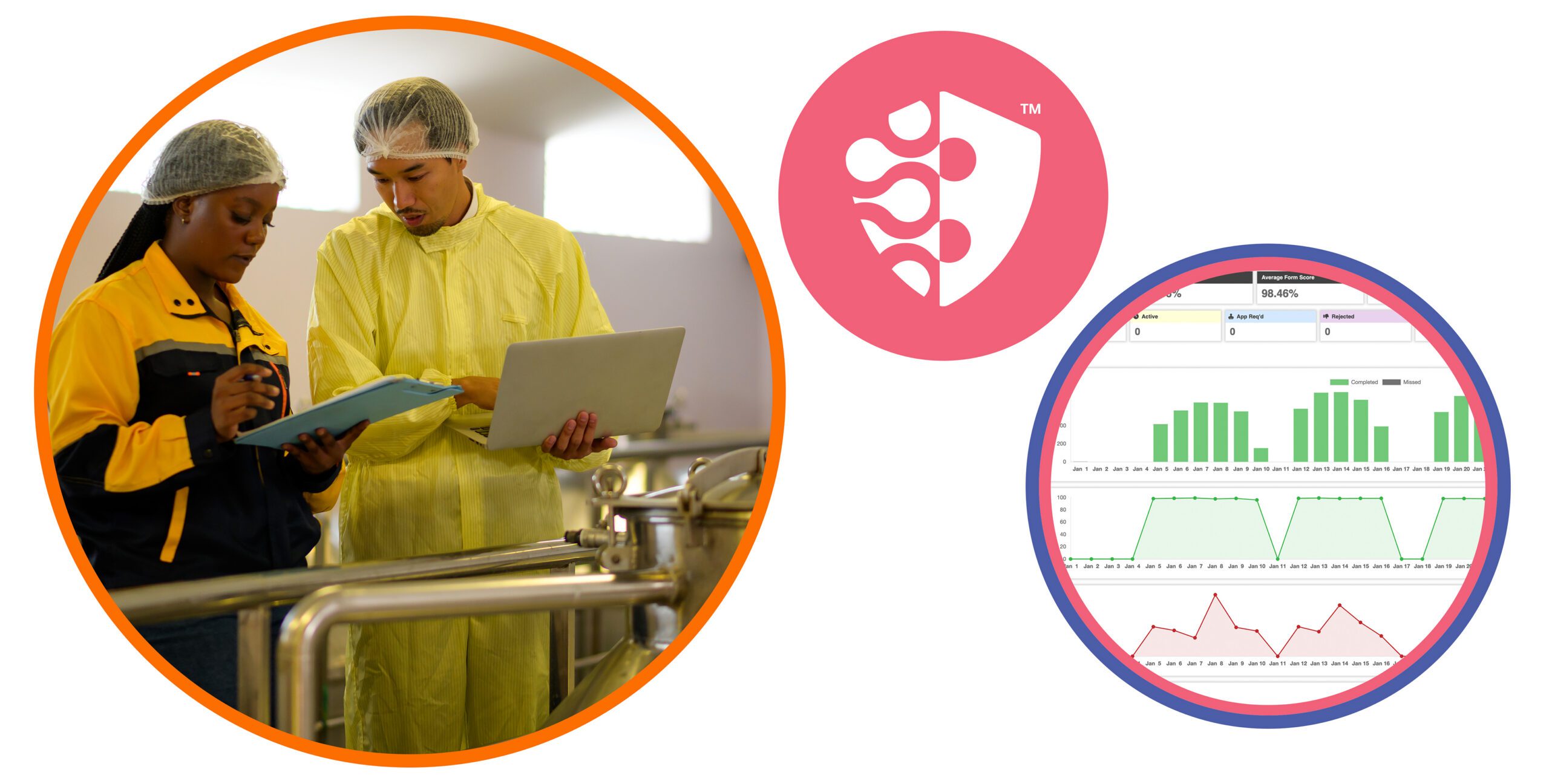
Technology connects standards to daily work and gives leaders timely information that stands up in audits.
Why paper systems fall short
Paper and spreadsheets slow retrieval, create version confusion and invite transcription errors. When auditors ask for a week of CCP checks or the last three calibrations, delays raise anxiety and distract the team from production.
Benefits of a food safety compliance system
A fit for purpose platform centralises data, standardises forms and ensures approvals and escalations happen at the right time. Dashboards flag overdue tasks and open non-conformances while audit trails show who did what and when. Integrated traceability links materials to batches and label versions so mock recalls become faster and more precise. These strengths reinforce consistent results in food safety compliance audits.
How manufacturing compliance platforms simplify ongoing audit readiness
Beyond point tools, a platform designed for factories helps you sustain compliance across lines and sites. It connects food safety tasks with quality checks, maintenance confirmations and operational routines to create a single source of truth.
A platform such as Gemba Compliance supports configurable workflows, digital checks and exception alerts that guide operators during the shift. Centralised data reduces duplication and makes reporting straightforward for internal and external audits. Leaders get up-to-date visibility of hotspots and recurring issues, which shortens the path from detection to correction. Treated as part of broader manufacturing compliance, the platform becomes the backbone for continuous readiness rather than a once-a-year scramble.
Turning your BRCGS audit into everyday control
A strong BRCGS audit outcome does more than pass a test. It shows your factory runs better every day. Make readiness part of your routine with clear roles, simple line checks and fast access to evidence, then use digital tools to surface exceptions and prove control with confidence.