


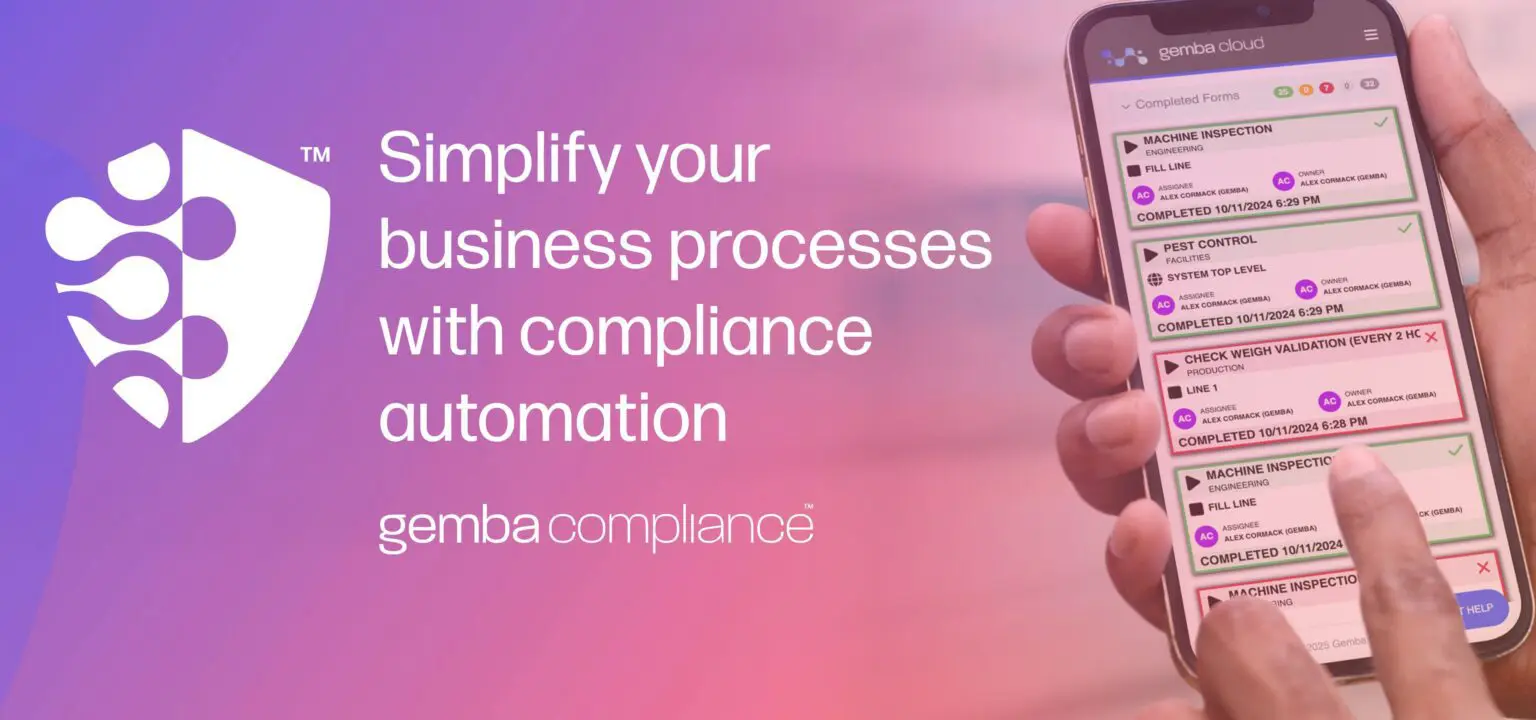



Food safety compliance software helps manufacturers turn policy into daily action. Instead of chasing paper and piecing together audits at the last minute, teams can use food safety compliance software to capture time stamped evidence and surface risks before they escalate.
The result is consistent execution, clear accountability and faster decisions when something goes wrong.
Why regulatory adherence is getting harder to manage manually

Regulatory pressure continues to rise while audits become more demanding. Retailer expectations keep expanding, yet many teams still rely on paper and scattered spreadsheets. This makes it difficult to prove control at scale and slows investigations when time is critical.
Food safety compliance software turns intent into repeatable practice by guiding checks, capturing evidence and surfacing risk as it occurs. It supports adherence every day rather than a single push before the auditor arrives. Using food safety compliance software as the operational backbone also improves consistency across shifts and sites.
Rising regulatory expectations and customer demands
Audits and customer visits now ask for deeper evidence. Teams must retrieve weeks of records in minutes, not days. Traceability checks are tighter, and buyers want to see current performance indicators and recent trends at high-risk points. They also expect proof that non-conformances are closed with verified corrective actions. Manual systems struggle to deliver at this speed.
Complex operations and fragmented data
Many factories run multiple lines handling a variety of products and allergens, sometimes across several sites. That means checks and records are often spread across clipboards, local files and shared folders. As a result, investigations often take longer, and teams miss patterns that signal emerging risk.
Risk of gaps in food safety and compliance
Missed checks, illegible entries and inconsistent versions create weak links. Without reliable data, corrective actions are delayed and issues recur. The impact on food safety and compliance is predictable – waste grows, rework increases and audit preparation becomes stressful.
What food safety compliance software should help you achieve
Software should deliver outcomes, not just features. The goal is consistent execution, strong evidence and faster decisions across the factory.
Consistent execution of food safety controls
Digital forms standardise how checks, inspections and sign offs are done with validation rules in place to prevent incomplete entries. These forms can include built in ownership and escalation to ensure the right people act when limits are breached, for example time stamps and user attribution to make accountability clear.
Stronger evidence and audit readiness
Centralised records create a single source of truth with documents made retrievable by product, line, lot or date without hunting through folders. When auditors ask for specific intervals of CCP checks or the last three calibrations, the evidence is complete and accessible. The result is easier proof of food safety compliance and less time assembling audit packs.
Better visibility and faster decision making
Dashboards show non-conformances, overdue actions and trends as information is submitted. This makes it easier for supervisors and managers to spot drift early and intervene before issues escalate. By comparing line and shift performance, they can then reallocate resources to direct support where risk is highest.
Key capabilities to look for in food safety compliance software

Use this buyer’s checklist to shortlist options and shape vendor conversations.
Configurable digital forms and workflows
The software should mirror your existing checks, audits and inspections without forcing a complete redesign. Look for conditional logic, required photo evidence and signatures. A workflow engine should manage approvals, holds and escalations so deviations cannot slip through.
Real-time alerts and non-conformance management
Automatic notifications reduce lag between detection and action. A solid non-conformance process within the system captures root cause, corrective action and verification of effectiveness. Closing the loop is essential to prevent repeat findings and to keep auditors confident.
Traceability, reporting and audit trails
Lot genealogy should link raw materials, intermediates, rework and label versions at key process points. Reporting should allow filters by line, product, date or site. Audit trails must show who did what and when with version control for documents and record templates.
Ease of use for frontline teams
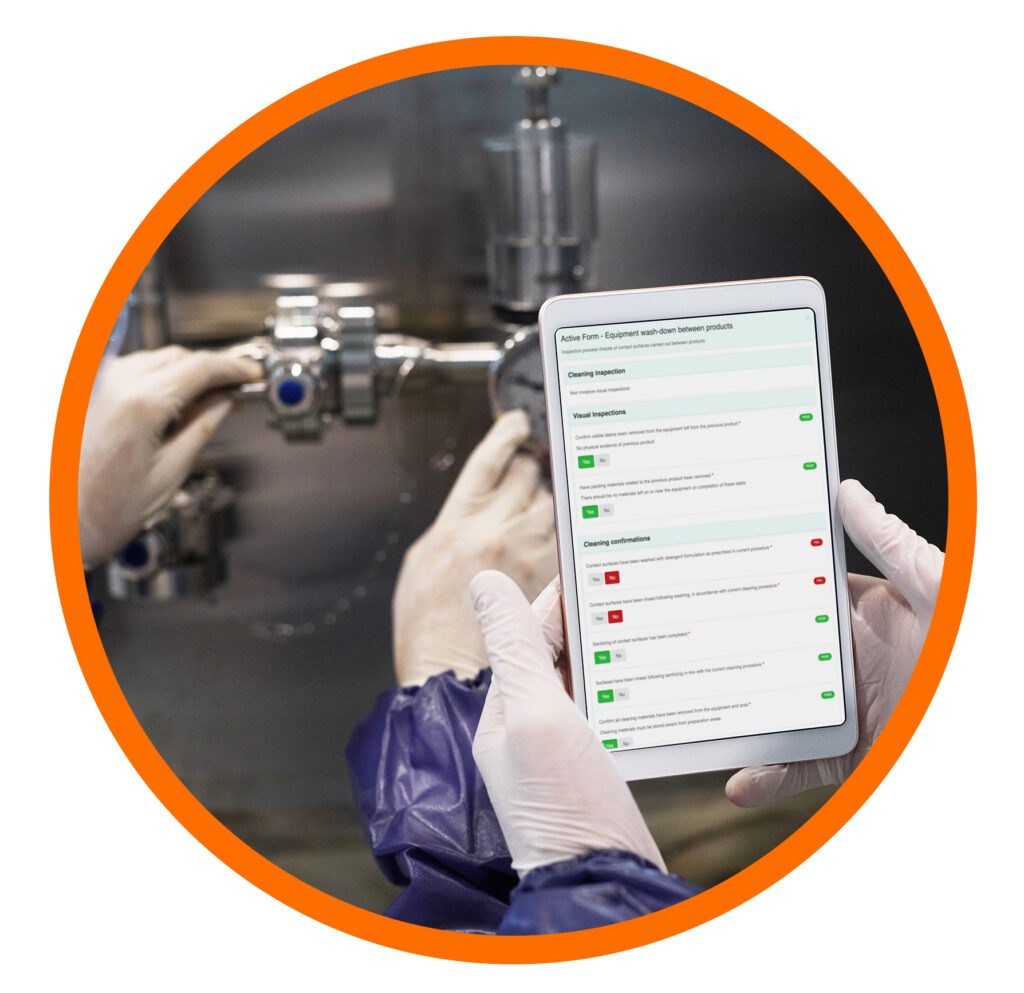
Interfaces must be simple and quick. Operators need clear task lists and prompts that guide the next action. Mobile or tablet access on the shop floor reduces transcription errors and keeps data timely. Adoption follows usability, and results follow adoption.
Aligning software with wider manufacturing compliance goals
Digital food safety tools deliver more value when they connect to the broader picture of factory governance. Many requirements overlap across quality, safety and regulatory domains. Positioning food safety compliance software within a wider compliance strategy builds one source of truth and one cadence for reviews.
Unifying food safety with other compliance activities
The principles that govern food safety checks also support quality inspections, hygiene verifications, maintenance confirmations and training records. A single platform avoids duplicate effort, keeps standards consistent and simplifies performance reporting across functions. Treat software selection as part of wider manufacturing compliance to prevent siloed systems.
Scaling across lines, sites and standards
Configuration should support different lines, products and customer codes without custom builds. Multi-site operations benefit from shared templates with controlled local variations. Centralised data lets leaders compare performance across factories and invest where impact will be highest.
Practical steps to implement food safety compliance software successfully
A structured rollout keeps adoption high and disruption low. The aim is to make the software fit the work, not the other way round.
Map your current processes and pain points
Document how checks, records and handoffs work today. Identify high risk or high-volume processes where delays or errors cost the most. Use this to prioritise which forms and workflows to digitise first.
Involve cross functional stakeholders early
Quality, production, engineering and IT all have critical input. Operators and supervisors flag usability needs that determine adoption. Align on definitions, responsibilities and escalation rules before you build.
Pilot, refine and scale
Start on a pilot line or area with meaningful audit exposure. Measure retrieval time for evidence, number of missed checks and closure times for corrective actions. Refine forms and alerts using feedback, then roll out across lines and sites with a standard toolkit. A measured approach helps your food safety compliance software deliver value quickly while building confidence for wider adoption.
Measuring the impact of food safety compliance software
Make benefits visible and quantifiable so momentum lasts beyond the first audit cycle.
Compliance and audit performance
Track fewer non-conformances, faster document retrieval and quicker closure of corrective actions. Monitor mock recall times and the accuracy of traceability data. These metrics show auditors that control is sustained throughout the year.
Operational and quality improvements
Watch for reductions in rework, waste and unplanned downtime related to food safety issues or investigations. Improvements in right first time and more stable processes indicate stronger control. Trend analysis should highlight hotspots, so improvement work is targeted.
Confidence in ongoing food safety and compliance
When teams trust the data, behaviours change. People raise issues earlier and supervisors coach to standard. A shared view of risk helps functions align on priorities and sustain gains across audits and seasons.
Turning software into a cornerstone of food safety and compliance
Food safety compliance software is not a shortcut. It is a reliable way to make good practice easy to follow and easy to prove. By standardising checks, strengthening evidence and giving leaders up-to-date visibility, the right solution becomes a daily ally in regulatory adherence. It also fits within wider factory governance and supports continuous improvement in food safety and compliance, as well as broader manufacturing compliance.
To get the best support, consider a platform approach to manufacturing compliance with Gemba so food safety sits alongside quality and operational checks in one place.