





In manufacturing today, labour tracking in manufacturing plays an increasingly important role in improving workforce productivity and team efficiency. Managers are under increasing pressure to meet tight production targets, reduce waste, and improve overall team efficiency. However, without clear visibility into team performance, it’s challenging to pinpoint exactly where improvements are needed.
This is where labour tracking in manufacturing plays a pivotal role. By tracking labour activity such as task completion times, individual and team outputs, and delays managers gain vital insights that enable more informed decisions. They can quickly identify bottlenecks, balance workloads fairly, and provide targeted coaching that elevates productivity across the factory floor.
What is labour tracking in manufacturing?
Labour tracking is the systematic recording and analysis of workforce activities within manufacturing environments. It involves capturing data such as the time employees spend on specific tasks, the output produced per individual or shift, and periods of downtime or delays.
This practice typically involves digital tools integrated into broader production management systems, including labour tracking software and shop-floor dashboards. By combining labour tracking data with insights from broader production monitoring, managers gain comprehensive visibility into both workforce and machine performance.
Common labour tracking activities include monitoring:
- Time spent on specific tasks or processes
- Individual employee or team outputs
- Shift-by-shift performance comparisons
- Periods of unplanned downtime or hold-ups during tasks
Labour tracking provides objective data, which supports continuous improvement initiatives by highlighting performance gaps, process inefficiencies, and opportunities for targeted training.
Why labour tracking matters for team efficiency
Labour tracking isn’t about surveillance. Instead it’s about giving teams the visibility and support they need to work more efficiently. Here are three ways that labour tracking data translates into improved team performance:
Improved visibility into who’s doing what
Labour tracking isn’t about surveillance. Instead it’s about giving teams the visibility and support they need to work more efficiently. Labour tracking provides concrete data that clearly shows where time is spent, who is productive, and which processes cause delays.
With these insights, managers can quickly spot bottlenecks or underused capacity and take corrective action reallocating resources or providing support precisely where it’s needed most.
Fairer distribution of work
Labour tracking promotes fairness by revealing workload imbalances, such as certain shifts consistently handling heavier workloads or specific employees being overloaded. When data clearly indicates these imbalances, managers can adjust task allocations and schedules to ensure a fair distribution of work, reduce burnout, and improve team morale.
More targeted coaching
Accurate labour data supports targeted training and coaching. Managers can quickly identify employees who may require additional support or highlight top performers whose methods could benefit the whole team. This kind of insight helps managers focus training where it will make the biggest impact.
What should you measure?

To effectively utilise labour tracking, manufacturers should prioritise capturing data on several key performance metrics:
Time on task
Measuring how long individual tasks or processes take is essential for identifying inefficiencies. For instance, if one assembly stage consistently takes longer than expected, targeted improvements such as training or process redesign can reduce unnecessary time wastage.
Output per person or team
Looking at output per person or per shift helps set realistic targets and spot where support might be needed. Comparing output across teams or shifts allows managers to investigate variations, learn from high-performing teams, and offer support to those struggling.
Time lost to delays or downtime
Recording time lost due to delays or downtime reveals hidden opportunities for improvement. Labour tracking data can highlight recurring issues, such as waiting for materials or machinery breakdowns. By analysing this data through a manufacturing dashboard, teams can systematically target wasteful practices and significantly reduce lost production time.
Labour tracking and continuous improvement
Labour tracking data is fundamental to continuous improvement efforts such as kaizen, lean manufacturing, and root cause analysis. When combined with tools such as Gemba software, it becomes easier to identify the precise points in a process where improvement is needed.
Data-driven insights enable manufacturers to measure the success of improvement initiatives objectively. For example, if a kaizen event targets reducing downtime between production stages, labour tracking provides the evidence to confirm whether the initiative has delivered real-world results.
Integrating labour tracking into wider production data
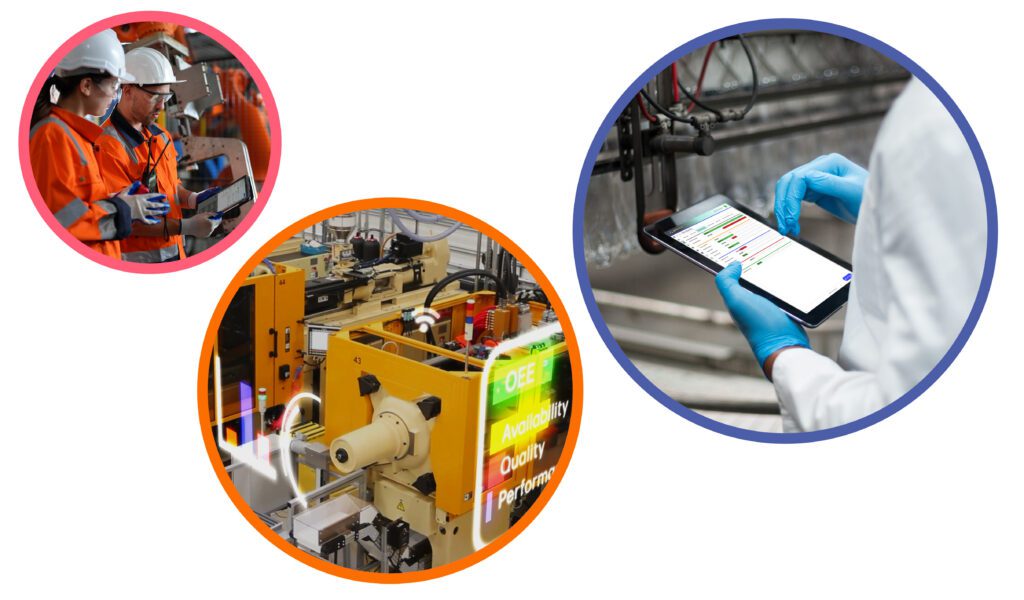
Integrating labour tracking with broader production monitoring ensures a comprehensive view of factory performance. Production monitoring data typically focuses on machine efficiency, throughput rates, and quality metrics. Combining these insights with labour data creates a fuller picture of overall operational performance.
For example, linking labour data with production monitoring systems allows teams to better understand if machine inefficiency is due to operator training needs or mechanical issues. Integrating labour data into a single manufacturing dashboard means all stakeholders can quickly access the performance insights most relevant to their role.
Barriers to adoption and how to overcome them
While labour tracking offers substantial benefits, it’s not without barriers. Common challenges include:
- Employee resistance: Some employees may worry that tracking means being watched or judged.
- Administrative burden: There may be concern over the time required for data entry or management.
- Trust and transparency issues: If not approached carefully, labour tracking can cause distrust or damage morale.
These challenges are best addressed through transparent communication and collaboration. Explain clearly how data will be used not to punish, but to identify support and improvement opportunities. Employees should be involved early, with their input shaping how labour tracking is implemented.
Additionally, choosing easy-to-use software integrated into daily workflows reduces administrative overhead and encourages quick adoption. When employees experience tangible benefits, such as fairer workloads or clearer feedback, initial resistance typically fades.
Turning labour insights into better team performance
Labour tracking significantly enhances team efficiency, from clearer visibility and fairer work distribution to better-targeted coaching and continuous improvement. When implemented thoughtfully, it supports both productivity and morale, enabling teams to perform at their best.
With systems like Gemba software, labour tracking seamlessly integrates into broader manufacturing processes, providing critical insights without interrupting workflows. Manufacturers who prioritise transparent, supportive labour tracking are better positioned to achieve productivity goals and maintain strong, motivated teams.
If you want a clearer view of how your team is really performing and practical tools to improve it, Gemba can help. Let’s talk.