





Digital transformation has reached pharmaceutical quality systems. What was once managed through filing cabinets and spreadsheets now increasingly operates through integrated pharmaceutical compliance management software platforms that change how organisations maintain regulatory standards.
For manufacturers evaluating whether to invest in pharmaceutical compliance management software, understanding the specific capabilities these systems provide, and the operational benefits they deliver, helps inform technology adoption decisions.
Why pharmaceutical compliance management software is becoming essential
Regulatory pressure continues to intensify
Inspection approaches have evolved from primarily reviewing paper records to examining electronic systems, metadata and audit trails in forensic detail. Regulators now routinely request system demonstrations during inspections, examining how software prevents unauthorised access and maintains data integrity.
Organisations that struggle to demonstrate robust controls face increasingly serious consequences. Warning letters frequently cite inadequate computerised system controls and insufficient audit trails.
Data integrity demands have become explicit and detailed
Expectations for data integrity have moved from general principles to specific technical requirements. Regulators require organisations to prove that records are attributable, legible, contemporaneous, original and accurate.
They examine whether systems prevent unauthorised data modification through technical controls rather than relying solely on procedural oversight. They assess whether audit trails capture meaningful information—not just that a record was changed, but who changed it, when, why and what the previous value was.
Manual systems have reached their practical limits
Paper-based approaches create bottlenecks when multiple people need access to the same documents. Version control becomes difficult to maintain as procedures are updated. Training records scattered across filing cabinets make it hard to quickly demonstrate personnel competency during inspections.
The volume and complexity of compliance requirements have outgrown what manual systems can reliably handle.
The core capabilities of pharmaceutical compliance management software

Document control features in pharmaceutical compliance management software
Software platforms provide repositories where procedures, work instructions and forms are stored with comprehensive version control. Every document revision is tracked, creating clear audit trails that show how procedures evolved over time.
Automated workflows route documents through review and approval stages without manual coordination. When changes occur, sophisticated systems can automatically identify affected documents and trigger necessary updates.
Comprehensive audit trails that satisfy regulatory expectations
Every action within compliance software—viewing a document, modifying a record, approving a change—generates a timestamped entry that identifies the user and describes what occurred. These audit trails should not be able to be disabled or edited by standard users.
The detail captured goes well beyond simple change logs. Systems record not just that a field was modified, but what the original value was, what it became, who made the change, when it occurred and why.
Systematic training and competency management
Training and competency tracking functionality transforms how organisations demonstrate that personnel are qualified for their assigned roles. Software systems manage training curricula, track completion of required courses and automatically identify when refresher training becomes due.
Systems can link training records to specific procedures. When an SOP is updated, the software flags everyone who works under that procedure as requiring retraining.
Structured CAPA and deviation management
When deviations occur, software guides investigation teams through structured workflows that ensure consistent, thorough responses. Task assignment functionality creates accountability that manual systems struggle to maintain.
Trend analysis functionality highlights patterns across multiple deviations that might indicate systemic issues requiring attention.
Integrated reporting and quality dashboards
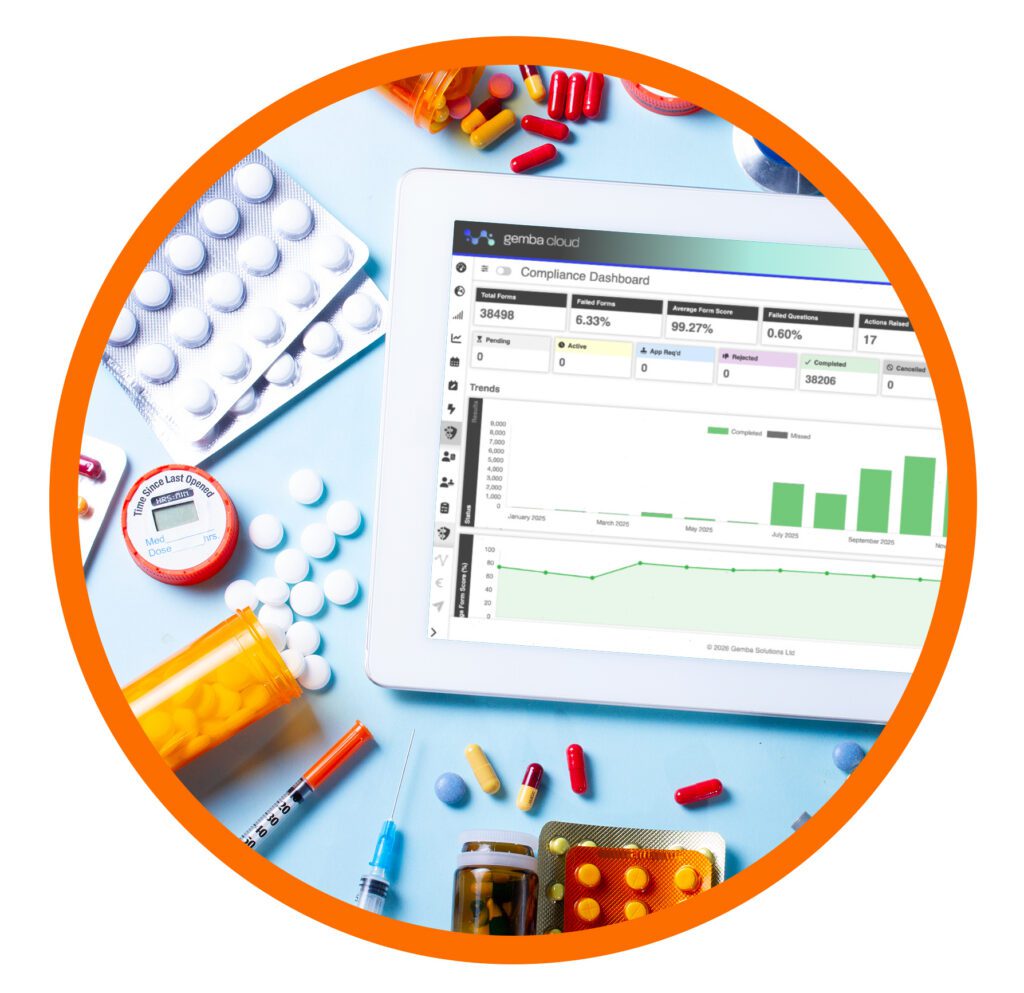
Quality metrics can be displayed in real time, showing deviation rates, training completion percentages, overdue CAPA actions and other key performance indicators. Compliance dashboards provide at-a-glance visibility of system health, alerting management to emerging issues before they become critical.
How pharmaceutical compliance management software supports regulatory compliance

Alignment with MHRA, EMA and GxP requirements
Software vendors typically design their platforms to align with requirements from major regulatory authorities. When systems are properly configured, they help reduce the risk of users acting in ways that violate regulatory expectations.
This built-in compliance support reduces the burden on personnel to remember and follow every procedural control. The system enforces many requirements automatically.
Technical controls that demonstrate data integrity
These technical controls address data integrity concerns far more effectively than procedural controls can achieve:
• Timestamps prove when actions occurred.
• Access controls demonstrate that only authorised personnel could modify critical data through role-based permissions.
• Version tracking shows how documents or records evolved over time.
Streamlined inspection preparation and regulatory submissions
When documentation exists in a well-organised electronic form with robust search capabilities, responding to inspector requests becomes far faster. Generating reports for regulatory submissions no longer requires manually compiling information from multiple sources.
Many organisations report that electronic compliance systems dramatically reduce the stress and resource demands of inspection preparation.
Many organisations address these challenges by adopting systems such as Gemba Compliance, which provides digital traceability, automated workflows and real-time control over key compliance activities.
The operational benefits for pharmaceutical manufacturers
Reduced administrative burden frees quality resources
These efficiency gains allow quality teams to focus on activities such as investigating root causes and identifying improvement opportunities:
• Automated workflows handle routine routing and approval tasks without quality personnel needing to track down approvers.
• Electronic signatures eliminate the need to physically locate individuals for sign-off.
• Document searches that might have taken hours complete in seconds.
Stronger standardisation enables multi-site consistency
When everyone works within the same system using the same procedures and workflows, practices become consistent regardless of location. This means that when changes are made in response to process improvements or regulatory updates, they can be deployed across all sites simultaneously.
Enhanced visibility creates natural accountability
When tasks are assigned electronically with defined due dates, it becomes immediately apparent when work is overdue. Management dashboards highlight where problems exist without requiring manual status reports.
The visibility extends to quality trends and patterns that might otherwise remain hidden, enabling proactive intervention before problems become severe.
Choosing the right pharmaceutical compliance management software
Scalability to support growth and expansion
Systems should accommodate increasing numbers of users, documents and records without performance degradation. Licensing models should align with how the organisation expects to scale—some vendors charge per user, others per site, others based on production volume.
Integration with existing technology infrastructure
Compliance software that can exchange data with existing manufacturing execution systems, laboratory information management systems and enterprise resource planning platforms creates seamless workflows and reduces duplicate data entry.
Integration capabilities vary significantly between vendors. During evaluation, organisations should carefully assess whether systems can connect to their existing infrastructure and how much effort those integrations require.
Usability that ensures adoption and sustained usage
Overly complex systems with steep learning curves may be rejected by users who revert to familiar manual processes. Intuitive interfaces, clear navigation and logical workflow design help ensure personnel actually use the system as intended.
During evaluation, involving end users—not just quality leadership—in assessing usability helps identify systems that will succeed in practical operational environments.
Reporting maturity that supports decision-making
Some systems provide basic pre-configured reports with limited customisation options. More sophisticated platforms offer flexible reporting tools that allow organisations to create bespoke analyses.
Assessing reporting capabilities against actual organisational needs—both current and anticipated future requirements—helps avoid selecting systems that prove limiting as requirements evolve.
Support and implementation considerations
Implementation complexity varies considerably between solutions. Understanding what implementation involves—data migration, system configuration, validation activities, user training—helps set realistic expectations for timescales and resource requirements.
Ongoing support quality matters significantly for long-term success. Responsive vendor support becomes particularly important when organisations encounter issues that affect production or quality operations.
How Gemba can help
Gemba has deep experience helping pharmaceutical organisations improve visibility, reduce administrative load and strengthen quality management processes. Our compliance platform is built to support real-world manufacturing environments, providing digital tools that make documentation control, audit readiness and training management far more efficient.
Whether you are looking to replace manual systems or build a more scalable compliance framework, our team can help you identify the right approach and implement technology that delivers measurable improvements in performance and regulatory confidence.
Gemba Compliance addresses the operational challenges that pharmaceutical manufacturers face daily—from managing complex documentation requirements through to demonstrating robust data integrity controls during regulatory inspections. Our platform provides the functionality organisations need to meet current regulatory expectations whilst building foundations that support continuous improvement in quality performance.
Book a demo today!
Rethinking compliance for modern pharmaceutical operations
The question facing pharmaceutical manufacturers is no longer whether to adopt compliance management software, but rather when and which solution to implement. As regulatory expectations around data integrity intensify and manual systems reach their practical limits, digital platforms have transitioned from competitive advantage to operational necessity.
The benefits extend well beyond regulatory compliance. Organisations that implement well-chosen systems consistently report reduced administrative burden, faster decision-making through improved information accessibility, and stronger standardisation across multi-site operations. Quality teams gain time to focus on meaningful improvements rather than document coordination and manual status tracking.
Success depends on selecting software that aligns with your specific operational requirements, existing technology infrastructure and growth trajectory. Systems that offer robust audit trails, intuitive interfaces, flexible reporting and seamless integration capabilities provide the foundation for sustainable compliance performance whilst supporting the operational agility pharmaceutical manufacturers need in an increasingly complex regulatory landscape.